Best Office Games & Activities to Boost Team Morale
The best offices aren't just productive — they're fun. Here are the games and activities that actually get people away from their desks and talking to each other again.
📅 May 2026⏳ 9 min readBy Playseated
According to Gallup, companies with highly engaged employees are 21% more profitable than those without. And yet, most offices still treat culture as an afterthought — a beer fridge on a Friday, a mandatory team lunch once a quarter. The workplaces that genuinely retain people do something different: they invest in the texture of daily life at the office, not just the occasional event.
Games are one of the most cost-effective ways to improve that texture. A good office game creates natural breaks, unexpected conversations, and a sense of lightness that no all-hands meeting can manufacture. But not all games are created equal. A dusty ping pong table that nobody uses isn't culture — it's furniture.
This guide covers the best office games for 2026: what makes a game actually work in a professional setting, which ones consistently get played, and which one we think every serious office should have as its centrepiece.
21%More profitable with engaged teams
87%Of employees are disengaged globally
5 minAverage game length — perfect for breaks
// 01What Makes a Good Office Game?
Before looking at specific options, it helps to know what criteria actually matter. A game that works brilliantly at a student union might be completely wrong for a professional office environment. Here's the framework we use:
⏳
Quick to Play
Matches should be completable in 5–10 minutes. Anything longer cuts into focus time and becomes a scheduling problem rather than a culture benefit.
📖
Easy to Learn
No long instruction manuals, no steep learning curve. A new employee should be playing a real game within two minutes of sitting down.
👥
Creates Spectators
The best office games draw a crowd. When people stop to watch, you get organic conversation and team bonding — even for those not actively playing.
♿
Inclusive for All
It must work for different ages, fitness levels, and physical abilities. Games that exclude a segment of the team defeat the purpose of culture investment.
📏
Reasonable Footprint
Most offices don't have unlimited space. The game should fit comfortably in a breakout area without dominating the floor plan.
🔇
Low Noise Impact
Games played near working areas need to be relatively quiet. Constant noise near desks will create friction rather than fun.
The honest filter: Run any game through this list before buying. A foosball table scores well on "quick to play" and "spectators" — but often fails on noise and sometimes on inclusivity. The best office games score well on all six.
// 02The 8 Best Office Games in 2026
#1// Top Pick for Office Culture⭐ Best Overall
Bench Soccer Table (Subsoccer S7)
Bench soccer is the standout office game of 2026 — and it's not particularly close. It's a 1v1 seated sport where two players face each other across a low table and use their feet to shoot a ball under the opponent's bench. Matches take 5–10 minutes, spectators naturally gather, and the format creates an instant tournament culture that other games rarely achieve.
What makes it work so well in a professional setting is the seated format. There's no running, no jumping, no physical contact — just sharp focus, competitive intensity, and real skill development over time. Players of all ages and fitness levels compete on equal terms. A 55-year-old executive can beat a 25-year-old new hire, and frequently does.
The Subsoccer S7 is the full-size competition model — 234cm long, 89cm wide — and fits comfortably in any breakout room or open-plan area. The black finish looks intentional rather than toy-like, which matters in a professional environment. Tech companies, co-working spaces, and sports-adjacent businesses have been the earliest adopters, but any office with a real culture focus benefits from it.
The 1v1 format also solves a common problem: it doesn't require a minimum number of players to be fun. Two people can have a competitive, enjoyable match at any time. But when a crowd forms — and it will — the game becomes a social event without anyone organising it.
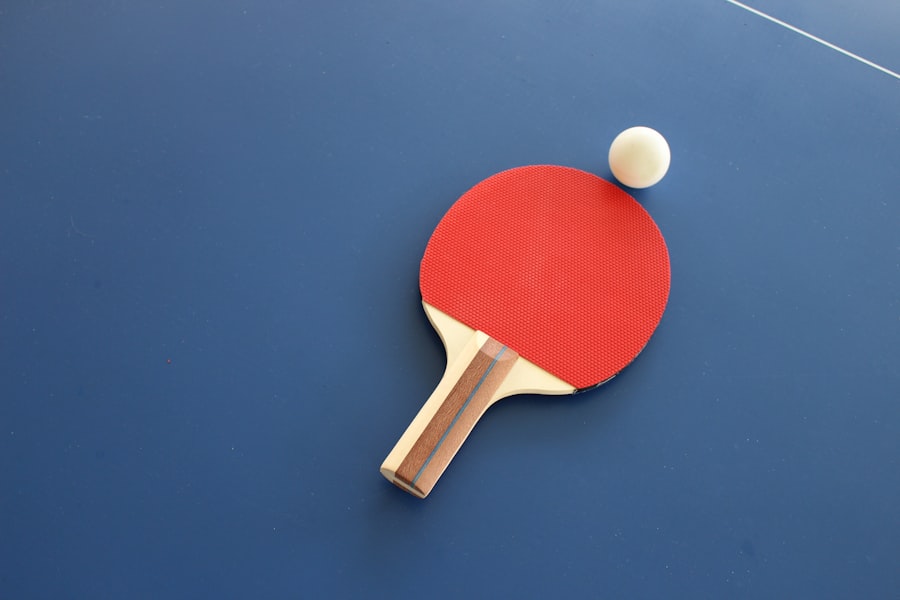
The office classic. Ping pong is fast, widely understood, and genuinely competitive. A decent table from Cornilleau or Butterfly fits most breakout rooms and doubles as a meeting table with a cover board. The downsides are real though: it generates significant noise, requires reasonable hand-eye coordination to be enjoyable, and draws a crowd only when the players are reasonably skilled. For many offices, the table ends up used by the same three people. Still — it's a strong choice if space and noise aren't constraints.
Match Length5–15 min
Players1v1 or 2v2
Noise LevelModerate–High
#3// For the Competitive Office⚽ Fan Favourite
Foosball Table
Foosball has been an office staple since the 90s tech boom, and it still works. The 2v2 format means it's inherently a team game, which bench soccer isn't — that's its main advantage. The downsides are the noise level (the rods and ball can be quite loud) and the tendency for "spin shots" to dominate play, which feels less skill-based over time. It also has a larger footprint than most offices account for. A solid choice for a larger space, particularly if you want a 2v2 format.
Match Length10–20 min
Players2v2
Noise LevelModerate–High
#4// For the Quieter Office🎯 Low-Key Hit
Darts Board
A quality electronic dartboard (the kind with soft-tip darts and a digital scoreboard) is one of the best low-footprint additions to a breakout space. It takes up almost no floor space, requires no table, and is genuinely competitive. The electronic scoring removes arguments and makes it accessible to casual players. The main limitation is throughput — it's a 1v1 game that takes longer per match than bench soccer, and the spectator dynamic is weaker. Best suited as a secondary game alongside a primary social piece.
FootprintWall mount only
Match Length10–20 min
Noise LevelLow
#5// For Large Open Spaces🎉 Group Favourite
Giant Jenga / Garden Games
Oversized versions of Jenga, Connect Four, or garden bowls work brilliantly in offices with large open areas or outdoor terraces. They require no skill to start, create natural crowd moments as the tension builds, and work for large groups. The downside: they're slow-paced, occasional rather than daily games, and don't create the competitive loop that drives regular engagement. Think of these as event games — great for a summer social or onboarding day, less effective as a daily culture fixture.
Best ForEvents & socials
PlayersGroups of 4–20
Noise LevelLow–Moderate
#6// For the Golf-Friendly Office⛳ Compact & Fun
Office Putting Green
An indoor putting green — 8 to 12 feet, with contours and an auto-return — adds a surprisingly engaging layer to a breakout space. It's quiet, low-impact, and universally accessible. For offices with a golf-heavy culture (finance, law, consulting), it becomes a genuine daily ritual. The limitation is clear: it appeals most to people who already play golf, which can make it a niche addition rather than a culture-wide one. Best positioned as a secondary game for a diverse office.
Footprint~3–4m long
Players1–4
Noise LevelVery Low
#7// For Creative & Strategy Cultures🧩 Cerebral Choice
Board Games Corner
A well-curated selection of modern board games — think Catan, Ticket to Ride, Codenames, or Azul rather than Monopoly — creates a different kind of social space. These are longer-form experiences, so they work better for lunch sessions or end-of-day wind-downs than quick mid-morning breaks. The investment is low, the shelf presence is high, and it signals something about your office culture that ping pong doesn't. A dedicated games library near a seating area is a surprisingly high-return culture investment at modest cost.
Match Length30–90 min
Players2–8
Noise LevelLow
#8// For Long Breakout Corridors🏐 Niche but Loved
Shuffleboard Table
Office shuffleboard has a dedicated following and deserves more credit than it gets. The long, narrow table fits beautifully in corridor-style breakout spaces, the gameplay is immediately intuitive, and it creates a leisurely but competitive atmosphere. It's the kind of game that works particularly well in creative agencies, tech studios, and media companies where the office aesthetic matters. The main barrier is cost — a quality shuffleboard table is a significant investment — and the footprint, which can be challenging in tighter offices.
FootprintUp to 5.5m long
Match Length10–20 min
Noise LevelLow
A note on the games you should avoid: Pool / billiards takes up enormous space and plays slowly. Arcade machines become noise nuisances. Ring toss and cornhole are garden games that feel out of place indoors. And a gaming console setup — while popular — tends to isolate players from the broader team rather than creating shared moments.
// 03How to Run an Office Bench Soccer Tournament
One of the biggest advantages of the bench soccer table over other office games is its natural tournament format. The 1v1 structure makes brackets simple, matches are short enough to run during lunch, and the spectator culture it creates makes the whole event feel bigger than it is. Here's how to run it:
1
Sign-Up Sheet (1 week before)Post a signup sheet — physical or on Slack/Teams — with a deadline. Cap it at 8 or 16 players to keep brackets clean. A prize (bragging rights, a small voucher, a trophy) increases sign-up rates significantly.
2
Build the BracketUse a free bracket tool like Challonge or a simple printed sheet. Seed players randomly unless you want to separate known rivals. A 16-player single-elimination bracket needs exactly 15 matches — very manageable across a lunch week.
3
Run Matches at Lunch (Days 1–4)Schedule two or three matches per lunch break. Each match takes 5–10 minutes. Post results on a shared channel after each session. The bracket filling up creates its own momentum and conversation across the office.
4
Semi-Finals — Announce in AdvanceGive the semi-finals a moment. Announce the four remaining players at the start of the day, let people know when they're happening, and encourage gathering. The semi-finals are where the atmosphere tips from casual to genuinely exciting.
5
The Final — Make it an EventEnd-of-week, end of day. A small gathering, a designated commentator (someone always volunteers), maybe a brief trophy presentation. The whole office has followed the bracket — the final should feel like a conclusion worth watching.
6
Keep the Tradition GoingMonthly or quarterly tournaments become a workplace institution. The person who beat everyone in March wants revenge in June. New employees join and immediately have something to compete in. It creates a thread of shared experience across the year.
Pro tip: Pair the tournament with a physical leaderboard in the breakout area — a whiteboard or printed sheet works fine. Visible rankings dramatically increase daily play between tournaments, not just during them. People want to practise before the next bracket begins. Get the Subsoccer S7 to get started →
// FAQCommon Questions from Office Buyers
The Subsoccer S7 table itself is 234cm long and 89cm wide. For comfortable play, you need around 60cm of clearance behind each bench — so plan for a floor area of approximately 234cm x 210cm. That fits in most breakout rooms and open-plan corners. Measure your intended space before ordering and contact the Playseated team if you want to confirm fit.
Bench soccer is strictly a 1v1 format — that's part of what makes it so clean and fast. However, the spectator culture it generates means three, four, or ten people can be engaged with a match at any time. In practice, a crowd naturally gathers, a queue forms, and people rotate through matches throughout the lunch break. The 1v1 format is an asset, not a limitation.
Yes — bench soccer is a seated, low-impact sport with no physical contact between players. There's no risk of injury from collisions, and the noise level is very low (just the sound of a small ball on a mat). The table looks like professional sporting equipment, not a toy, which means it fits naturally into smart office environments. It's been adopted by tech companies, co-working spaces, and hotel lobbies without issue.
For corporate orders or multiple units, contact the Playseated team directly via the website. Bulk enquiries — whether for a co-working chain, a multi-site company, or a hospitality group — are handled on a case-by-case basis and Playseated is set up to support larger orders with appropriate logistics coordination.
🏢
Upgrade Your Office Culture Today
The Subsoccer S7 is the office game that actually gets played — every day, by everyone. In stock and shipping now.